FORZA MOTORSPORT 6: APEX
Favorite Gameplay Component
My favorite gameplay component of Forza Motorsport 6: Apex is altering and tailoring my driving style to the conditions of the race. If ever I attempt to reach top-speed on a wet track such as Brands Hatch United Kingdom, the vehicle spins off track and out of control.
That’s a challenge for me, as my strategy isn’t so much into drifting, but in staying as straight as possible, so that I can reach over to 200 km/h -- keeping within a controllable limit.
Another method of mine I had to retire -- and this is coming from the likes of Asphalt 6: Airborne and Mario Kart Double Dash -- which is ramming into players. I quickly found out in a vehicle simulator under the laws of natural physics, this reduces my speed on impact.
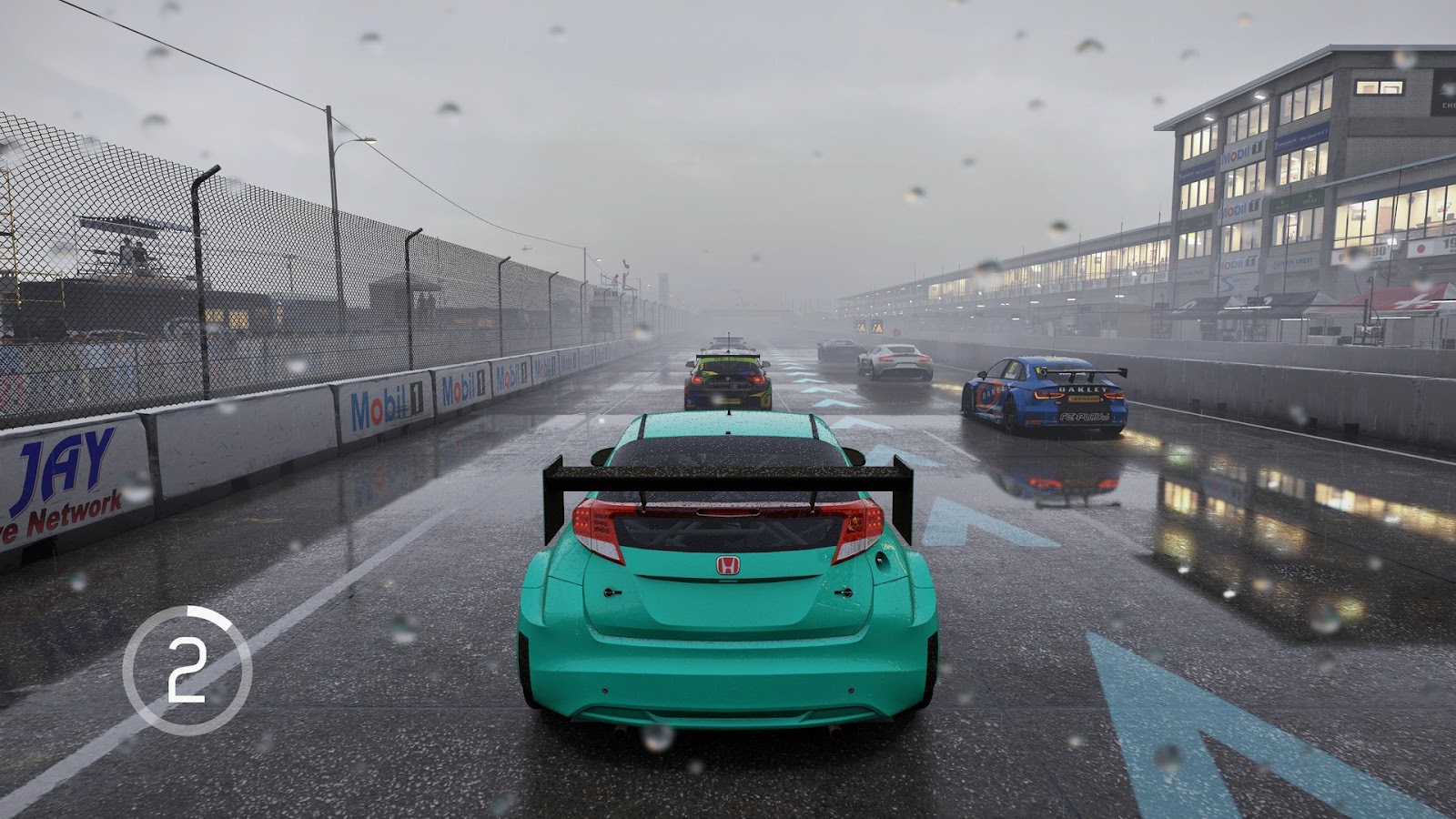
There are also frequent bottlenecks at turning points in the track; luckily I can use my best strategy and I find this to be the best opportunity to strategically slip past other cars when an opening presents itself.
Least Favorite Component - and How I Would Change It
After pitting the player against the CPU during the tutorial race, the first real Drivatar circuit race can be a rough shake for first-time vehicle sim racers.
Coming in from Gameloft’s Asphalt franchise, where nitro boosts secure you a first place trophy and physics have little role, it was an entire overhaul of my expectations.
Forza Motorsport 6 has an option to reduce the difficulty of the race and subsequently the Drivatar type, but what I found in some races is that it can actually becomes more difficult. The bottlenecks are larger, braking periods are longer -- and before you know it, you find yourself dodging vehicles, trying to not to slam into them or fly off-track, over actually racing against them.
I would change this by allowing the player to choose the type of Drivatar they race -- viewing player stats and selecting competition accordingly; the XP and medal system can stick, where the lower the difficulty, the less the player earns.

There is also an issue I’ve encountered where often times there is one Drivatar that will race at a significantly higher speed than all of the others -- not unbeatable, but they may push ahead at least 10-15 seconds ahead of the 2nd place driver.
During one race, I was about 2 seconds behind 2nd place, but at least 10 seconds behind first and that to me seems unbalanced; not uncommon in racing games, but the simplest way to beat that Drivatar is to upgrade or purchase a better vehicle.
I would solve this by awarding players at least ⅓ of the racing points at start of the game, needed to purchase a more powerful entry-level vehicle. That way earning the other near 70% is still remains challenging, but the player has more of an incentive to race and lose a few more times, for the chance of purchasing a better vehicle.
In this case, this allows the player not only to become better acquainted to the style of the game, but they can also in turn amass enough points to upgrade their racecar or purchase another vehicle for future races and not be miles behind the other cars in terms of performance, which is something that may frustrate new players.
In Conclusion

In Forza Motorsport 6: Apex, the player races to earn medals and race points they can use to purchase more powerful vehicles. There is a broad range of tracks (28 in-game, 2 DLC) that can be unlocked by placing at 6th or higher to advance to the next race.
Dynamic markers guide the player on the best route -- blue when you can accelerate, orange when you should slow down and red to indicate when to hit the brakes -- a bottleneck is coming.
In Forza Motorsport 6, may the best racer win. To be the best in this game it’s not really down to serendipitous chance or pure luck, but refined skill that comes from a lot of racing and tweaking.
The faster your vehicle and the more skilled a driver you are, the higher you'll rank in the race and worldwide. It’s something that newcomers can quickly adjust to -- but they must put it all into practice with quick reaction and opportune timing during the race to progress.
Comments
Post a Comment